Start with the job, not the light
The temptation, looking at a flashlight catalogue, is to pick by lumens. More is better, surely. But a 5,000-lumen flood is the wrong answer for reading a paper map at midnight, and a 1,000-lumen pocket light will not spot a runner across a frozen field at 200 metres. Decide first what the light has to do, then match the specs to that.
The shop-by-use page is the fast version of this. What follows is the longer version — the underlying numbers, why they matter, and where Fenix lights tend to land on each.
Lumens — brightness, but not range
Lumens measure total light output. Doubling lumens roughly doubles the brightness of the lit area, but throw distance grows much more slowly. A rough scale for tasks:
- 50–200 lumens
- Reading, close-quarters work, finding something dropped in the basement.
- 500–1,000 lumens
- Walking trail, garage work, household power outage.
- 1,500–3,000 lumens
- Outdoor search at moderate range, night photography work, bush travel.
- 5,000+ lumens
- Large open areas, search and rescue, construction site lighting at night.
Most users overestimate the brightness they need. Lumens come with costs: runtime, battery weight, switch heat, and price.
Beam distance — throw, not flood
A flashlight’s beam distance is how far it puts a small amount of light — the same intensity as a full moon — before the beam spreads too far. Long-throw lights have small, hot centre beams; flood lights have wide, even beams. For walking, choose flood. For spotting something at distance, choose throw. Many Fenix models offer both in one light through different modes.
Runtime — longer than you think
Manufacturer runtime numbers are normally quoted at the highest sustainable mode. The right mode for sustained use is two or three steps below maximum. A light rated for 90 minutes at turbo will usually do eight or more hours at a usable medium setting. Plan around the medium runtime, not the turbo runtime.
Battery type — runtime, weight, availability
Most Fenix lights run on rechargeable lithium-ion cells (18650 or 21700 being the most common), with some smaller models using 16340 or AA. The trade-offs:
| Cell | Where it fits |
|---|---|
| 21700 Li-ion | Highest capacity in a single-cell light. Roughly 30% more runtime than 18650; bigger and heavier. Used in most mid-to-high output Fenix lights. |
| 18650 Li-ion | Mainstream rechargeable size. Wide cell selection, in-light USB charging, good cold-weather behaviour. |
| 16340 Li-ion | Compact, used in keychain and pocket lights. Lower runtime; usually rechargeable in-light. |
| AA / AAA | Useful where rechargeable infrastructure is unreliable — remote cabin, emergency kit, glove box. Lower output than Li-ion; cells available everywhere. |
| Built-in | Sealed packs recharged by USB. Simpler for most buyers; harder to replace once the pack ages. |
IP rating — weather, not depth
The IP code on a Fenix spec sheet covers two things: dust ingress and water ingress. IPX6 means the light shrugs off heavy rain. IPX8 means it survives short submersion (depth and time vary by model; the manual is specific). For most outdoor users in Canada, IPX6 is enough. For paddlers, anglers, and SAR work in driving rain, look for IPX8.
Switch type — how it gets used
- Tail switch
- Classic placement; works well with a thumb in tactical or one-handed use.
- Side switch
- Better for cycling through modes; common on EDC and headlamps.
- Dual switch
- A tail switch for on/off and a side switch for mode selection. Faster and less ambiguous in practice.
- Touch / capacitive
- On some lanterns and accessories. Useful indoors; less reliable with cold or wet hands.
Tint — cool white, neutral, warm
Cool white tints (above 5,500 K) read brighter on paper but flatten colour and are tiring at night. Neutral tints (4,000–5,000 K) show colour accurately and are easier to look at over long sessions — the right choice for most outdoor and inspection work. Warm tints (below 4,000 K) cut through fog and show natural colour best; available on a smaller selection of Fenix models.
Putting it together
A reasonable shortlist for a first Fenix:
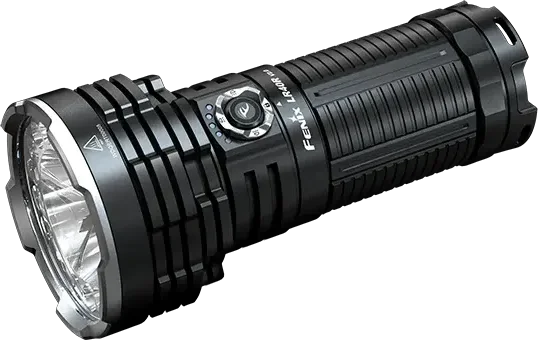
- Daily-carry pocket light: 1,000–1,800 lumen, 18650 or 16340 cell, side switch, IPX6.
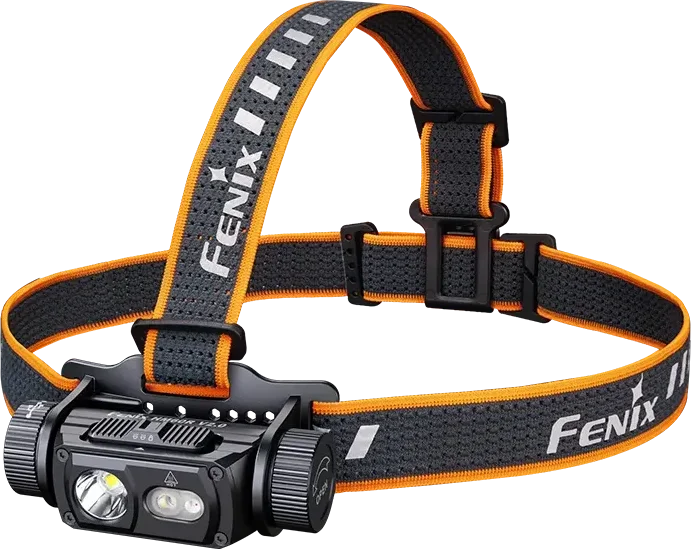
- Camp / general outdoor: 1,500–3,000 lumen handheld plus a 300–800 lumen headlamp. Both rechargeable.
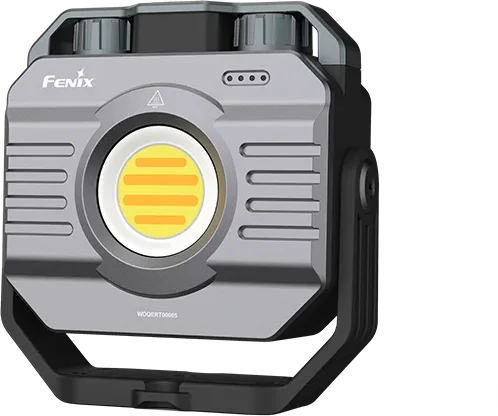
- Work light: 1,500–3,000 lumen, dual switch, IP68, with at least eight hours of useful runtime at medium.
- Cold cabin / emergency kit: AA-powered single-mode flashlight, kept in a sealed bag with fresh alkaline cells rotated yearly.
If a specific need is not covered here, send a short note through the contact form with what the light has to do. We will recommend two or three from the current line that fit.