Two jobs, not one
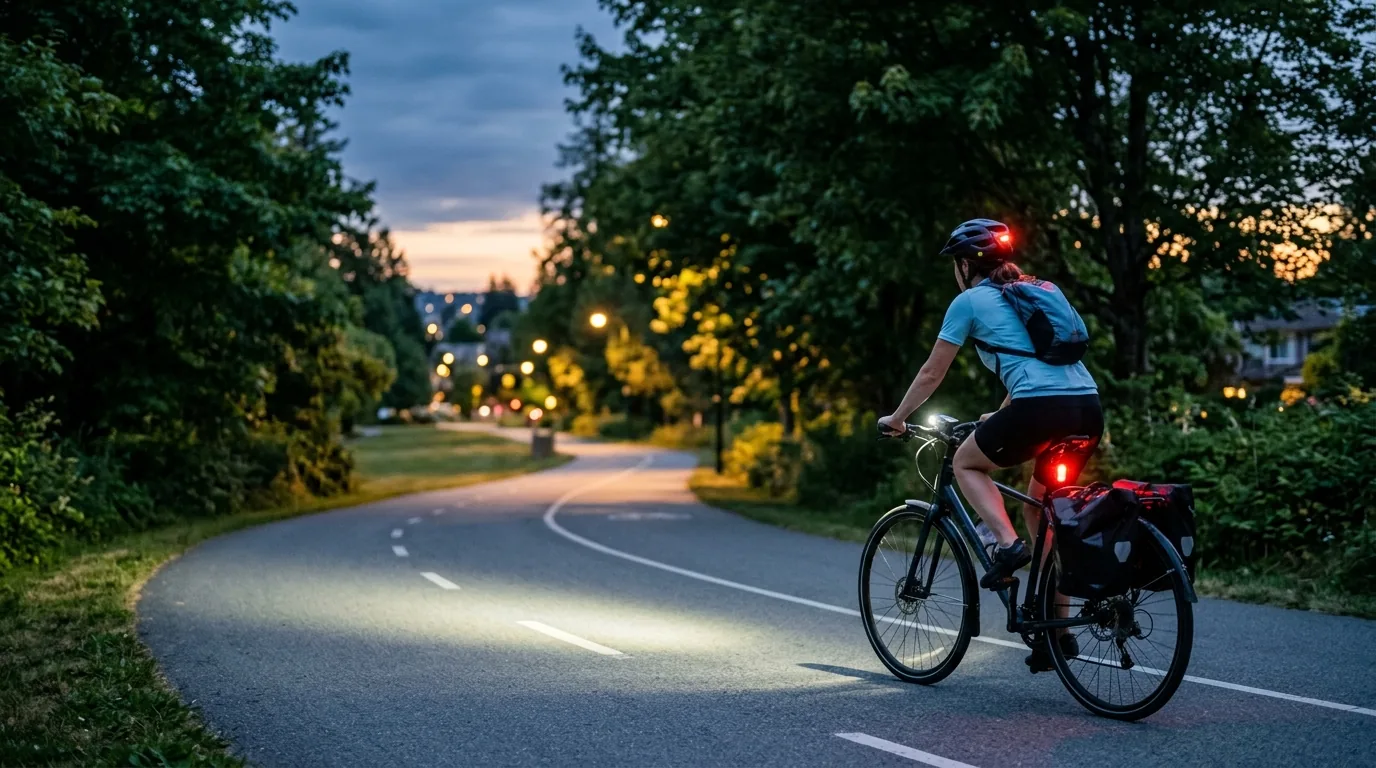
A bike light isn't one thing — it's two jobs happening at once. It has to let you see the road, and it has to let the road see you. Most of the lights people improvise — a phone clamped to the bars, a tiny blinky from the dollar bin — do one of those jobs badly and the other not at all. After dark, on a Canadian street in the rain, that gap is where trouble lives.
Being seen vs seeing
These pull in different directions, which is why a serious rider runs two lights:
- To be seen: a white light up front and a red light at the rear, so traffic in both directions knows you're there. This is the non-negotiable part — a front light does nothing for the car coming up behind you.
- To see: a bright, wide beam that reveals the road surface — the pothole, the gravel, the curb — early enough to react. On unlit roads this is what keeps you upright.
Beam shape matters as much as brightness
A flashlight throws a round hot spot; a good bike light spreads a wider, flatter beam shaped for the road ahead, so you light the surface without blinding oncoming traffic. That shaped beam is one of the real reasons to buy a purpose-built bike light rather than zip-tying a handheld to the bars.
The mount and the charging
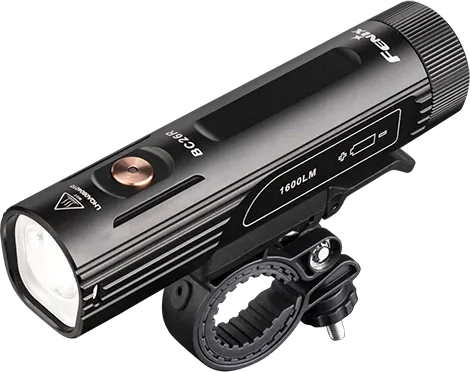
Two practical things decide whether you'll actually enjoy the light. First, the mount: a secure, tool-free bar mount built for the job keeps the beam steady over potholes and cobbles instead of rattling loose. Second, charging: a USB-rechargeable light fits a daily commute — top it up at your desk, ride home in the dark, repeat — with no batteries to buy.
For most riders the BC26R covers it — a bright, wide road beam on a solid rechargeable package with a proper handlebar mount. Pair it with a red rear light and you're set for the commute and the evening ride. Browse bike lights below.