The two-minute flashlight test
- Turn off the lights, or picture the house in the dark.
- Go to wherever your flashlight is kept. Can you reach it without your phone's light?
- Switch it on. Is it bright enough to read the labels on your electrical panel?
If it passed, you don't need anything from us at the moment. Keep that light where it is, check it twice a year, and count it as part of your kit. The lights further down are worth knowing about for the day you decide to replace it.
If you couldn't find it, it was dim, or it didn't turn on, that is the most common result, and the section on inexpensive flashlights below explains why.
While you are up, find the electrical panel and the water shut-off valve, and write down one contact who lives out of town. That is half of a household emergency plan, at no cost.
Three steps, in plain terms
The Government of Canada's Get Prepared advice comes down to three things: know the risks where you live, make a household plan, and keep a kit that lets everyone manage on their own for at least 72 hours. None of it takes long, and most of it is done once.
We have stocked Fenix in Canada since 2010 as an official Canadian Fenix distributor. Prices are in Canadian dollars, orders ship from Mississauga, Ontario, and warranty service is handled here in Canada.
Know the risks, then make a plan
A winter storm on the Prairies, a spring flood along the river, a wildfire season in the B.C. interior — plan for what is most likely where you live. The household plan takes about 20 minutes online. It names safe exits and a meeting place, one contact nearby and one out of town, who collects the children, and where the pets can go. It also asks that everyone know where the fire extinguisher, water valve, electrical panel, gas valve and floor drain are. That is usually a trip to the basement, often in the dark, which is why we put a headlamp in the kit as well as a flashlight.
What goes in the 72-hour kit
- Water — about 4 litres per person, per day, with some small bottles you can carry.
- Food that won't spoil, and a manual can opener.
- A flashlight and a radio, with extra batteries or a crank-powered model.
- Phone chargers, and a corded phone if you have a landline.
- A first aid kit, a couple of weeks of medication, and any special equipment.
- Cash for a few weeks of basic needs.
- Copies of birth certificates, passports, wills, insurance policies and your plan.
- Baby formula and pet food, if you need them.
Keep it in a backpack, duffel or wheeled suitcase in an easy spot, such as the front-hall closet, and make sure everyone knows where it is. Replace food, water, batteries and medication at least once a year. One small line in the official list is worth taking literally: check that you could find the flashlight in the dark.
We don't sell radios. Any battery or crank radio will do; one that can also charge a phone is a useful choice.
Why not an inexpensive flashlight?
Because the light in an emergency kit has to be one you can trust. An inexpensive light that has sat in a drawer for a year too often fails to turn on when it is finally needed — its AA or AAA batteries have leaked and corroded the contacts, or simply run flat. The extra cost of a Fenix is what you pay to know the light comes on.
- It holds its charge. In our experience, Fenix's own rechargeable batteries keep at least 75 per cent of their charge for years, particularly in lights with a mechanical switch, which draws no power while the light is off.
- It recharges from any USB source — a phone charger, a laptop, a power bank or the car.
- It is bright enough for every job in and around the house.
- It lasts through a long outage. On a low setting, a light such as the PD35 V3.0 gives up to 200 hours of steady light, more than a week.
One word you will see below: lumens measure brightness. A phone's flashlight gives about 50; 1,000 or more lights a back yard.
Choosing the light
The base kit
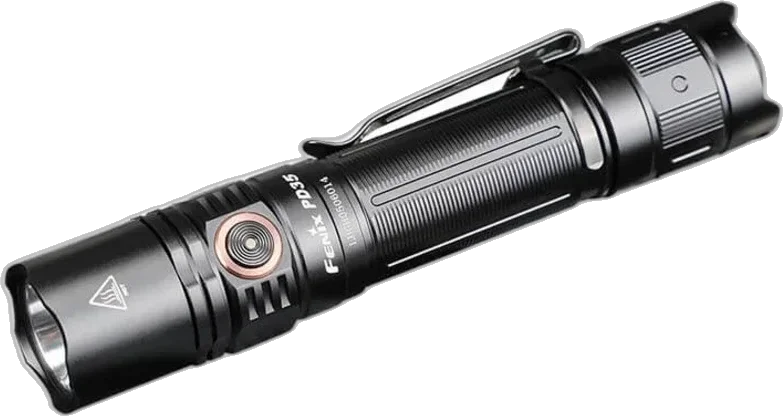
The PD35 V3.0 ($114.95) is a metal flashlight that fits a coat pocket and lights the whole back yard. Its rechargeable battery comes in the box and charges on its own through the included micro-USB cable — keep that cable with the kit, as most homes now have only USB-C. As a backup it also runs on two CR123A batteries, small lithium batteries sold at hardware and drug stores (we don't stock them) that keep about ten years in a drawer. On its lowest setting it runs for 230 hours. It is the lowest-cost light here, and the one to choose if you buy only one.
What we recommend
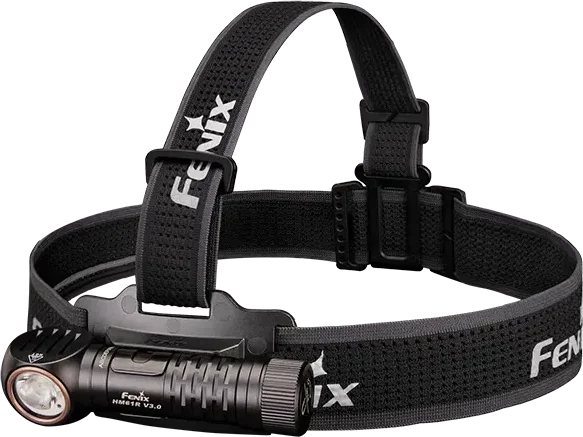
The HM61R V3.0 ($134.95) is the headlamp for the basement and the drive to the meeting place. It has a focused beam for distance, a wide soft light for close work and a red light for moving about at night, and runs about 11 days on its lowest wide setting. A magnet on its end holds it to the furnace or the fridge, it lifts off the headband to work as a flashlight, and it charges with the same USB-C cable as most new phones.
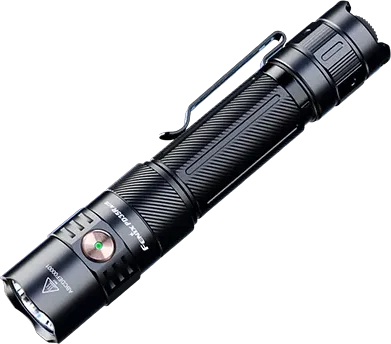
The PD35R ACE ($139.95) shares a name and a size with the PD35 V3.0, so here is the difference: it is a little brighter, and it charges through a USB-C port on the light itself, so the battery stays inside and your phone cable fits. Its gentlest setting lasts a month, it has an SOS mode, and it takes the same two CR123A batteries as a backup. It costs $25 more than the PD35 V3.0; for a kit that may sit untouched for months, the built-in USB-C port and month-long runtime are worth it. With the HM61R V3.0, it covers what most households will face.
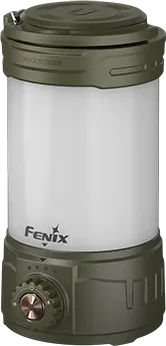
For the kitchen table, add a lantern. A flashlight lights what you point it at; a lantern lights the room. The CL26R Pro ($119.95) sits on the table or hangs from a hook, and its 50-lumen setting runs about 40 hours — several evenings on one charge. See why every home needs a lantern.
For rural homes and larger properties
These two are more light than a typical house or apartment needs. They earn their place on an acreage, a farm, a cottage or a long rural road, where there is more ground to check once the storm has passed.
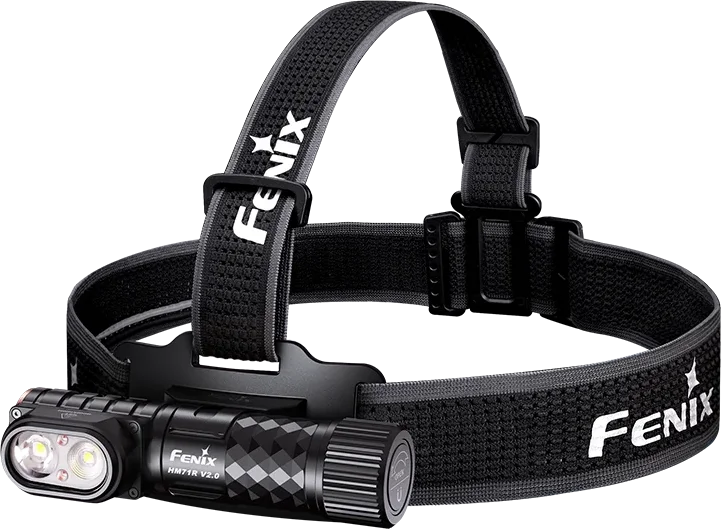
The HM71R V2.0 ($184.95) is a 3,500-lumen work headlamp on a large 21700 battery, with about two weeks of runtime on its lowest flood setting. It suits clearing a fallen branch or checking outbuildings through the night.
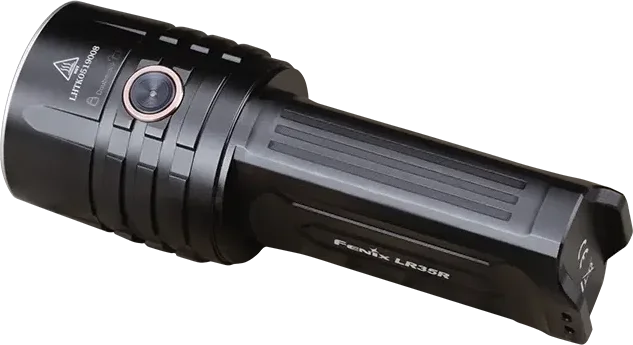
The LR35R ($273.95) puts out 10,000 lumens and reaches 500 metres, enough to light a yard, a field or a flooded lane. Two 21700 batteries are included. It ships in 5–7 business days.
Each light comes with its battery and a charging cable; there is no wall plug, so use any phone charger. Orders ship the same day from Mississauga, and shipping is free over $99. See delivery times, our 5-year warranty and returns.
Keeping the lights ready
- Repeat the two-minute test twice a year, and charge the lights while you are at it. The change to and from daylight time is an easy reminder.
- Add a USB power bank to top up the lights and a phone without the grid.
Browse our emergency lighting, or if you are not sure what suits your household, ask us.