Brightness is the easy part
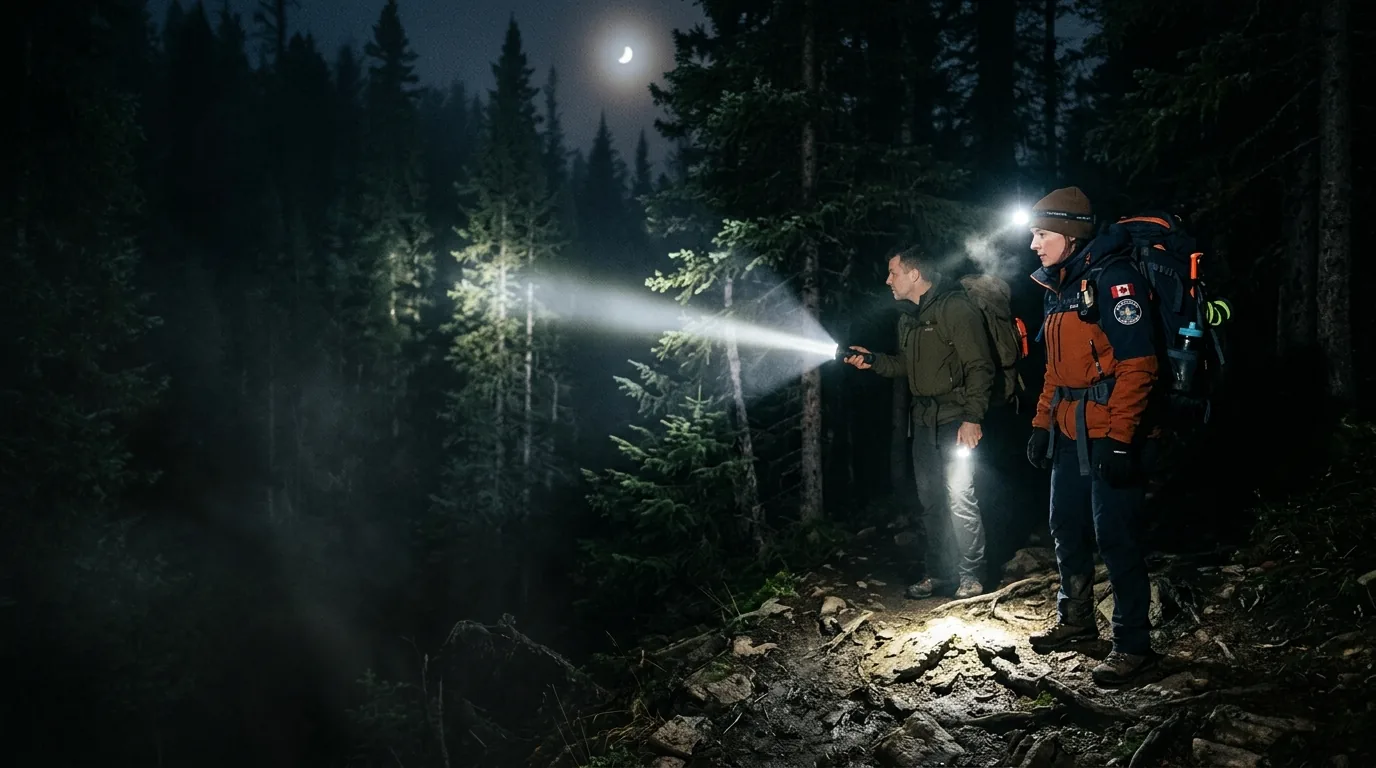
Plenty of lights are bright. Far fewer are still bright at four in the morning, kilometres from the nearest road, after hours in driving rain. A light for search and rescue — whether that's an organized volunteer team, a trail group, or the serious end of a rural emergency kit — is judged on what it does over a long, hard night, not what its box claims for the first ten minutes. The priorities are runtime, reach, and reliability, in roughly that order.
Runtime before peak lumens
A search doesn't end on a schedule. The output that matters is the one a light can sustain — a strong, steady beam you can run for hours — not a turbo it holds for two minutes before fading. When you choose a light for this work, look past the headline number to the runtime chart: how bright is it an hour in, three hours in, all night? That's the output you'll actually be searching by.
Throw to scan, without blinding the searcher
Search work needs a beam that reaches across terrain to pick out ground, tracks, and movement at distance — that's throw. But it also needs to light the ground in front of you without bouncing glare back off the rain or the fog. A good searchlight reaches out cleanly; a good headlamp floods the immediate ground so a searcher keeps both hands free for the radio, the GPS, and the rope.
Sealing that actually holds
Weather is a given, not an exception. A search light needs real ingress sealing — rated against dust and water, not just “water resistant” — so a downpour or a creek crossing is a non-event. The full buying guide explains the IP ratings to look for.
Plan the power
The light that matters is the one still running at the end. Carry at least a full set of charged spare cells per light, keep them rotated, and you remove the single most common reason a light quits mid-search.
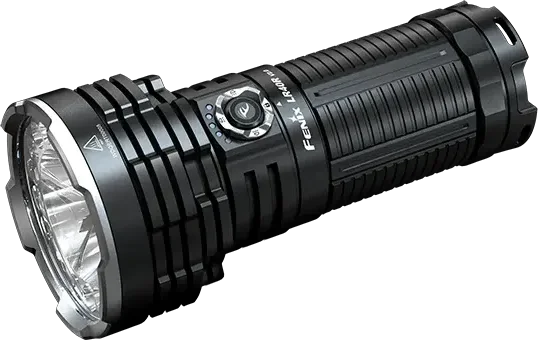
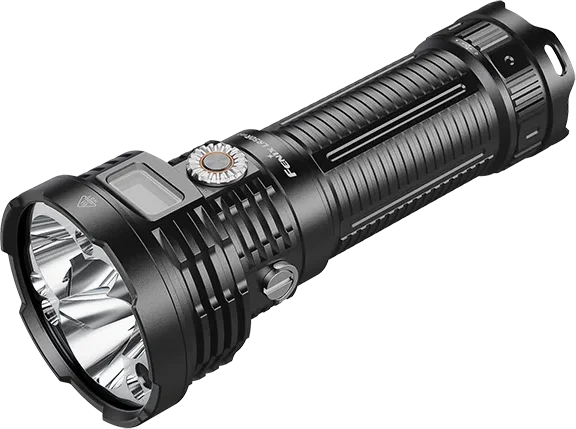
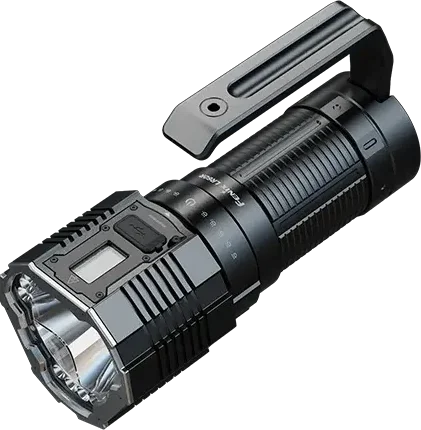
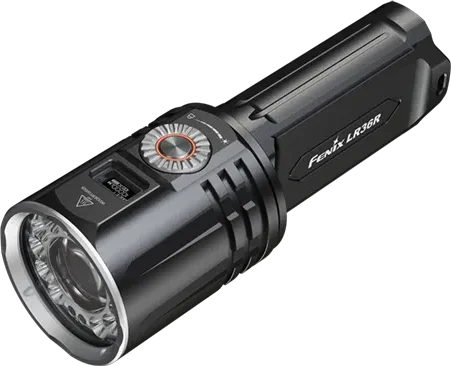
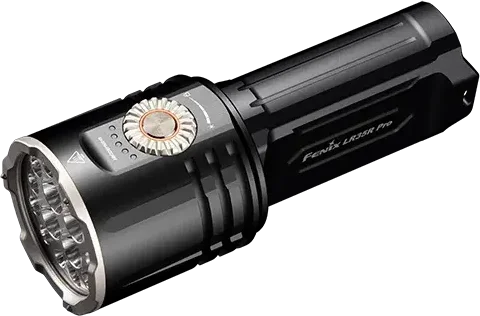
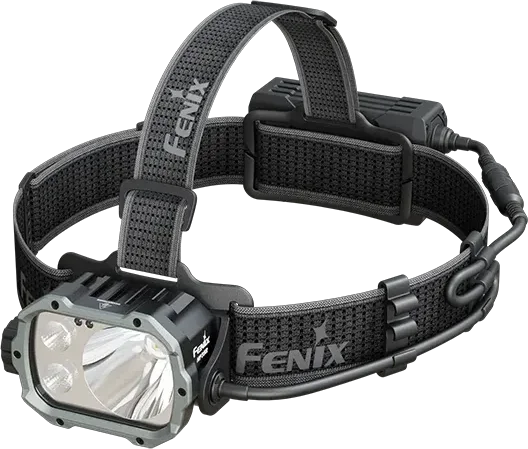
For the handheld searchlight, the LR family is built for exactly this — the LR40R, LR50R, and flagship LR60R throw enormous, sustainable light, while the LR36R and LR35R Pro pack serious reach into a more portable body. Pair one with a high-output headlamp like the HP35R or HM71R so every searcher has hands-free light of their own. Browse search-and-rescue lights below.